
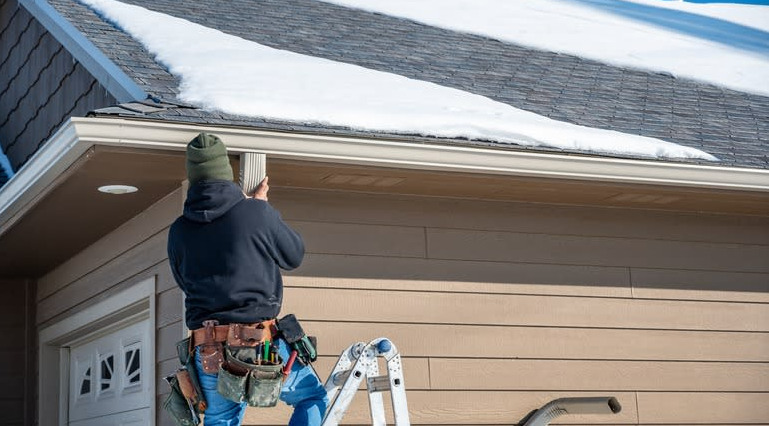
When it comes to maintaining a strong home exterior, understanding residential roof carpentry mistakes is more important than many homeowners realize. Little trim errors, misplacement, or poor cut fascia boards might lead to unnoticeable roof issues in the long term. These mistakes often go unnoticed until you suddenly have leaks, rot, or expensive repairs staring you in the face.
That is why numerous house owners prefer to rely on such efficient companies as ProSense Roofing, Inc., which know the importance of precision carpentry in the process of roof construction or renovation. Their trained expertise will handle the minor structural errors that a normal human mind will not see and will guarantee that each part of the structure, such as the soffits or fascia, fits as it should.
Top Residential Roof Carpentry Mistakes
One of the biggest issues for homeowners is the ability to spot residential roof carpentry mistakes before they become costly. The problems that are likely to go unnoticed until damage occurs include misaligned trim, lack of drip edges, and poor-quality materials. Even minor concerns, such as boards that are not screwed in properly or are overlooked on ventilation, can detract from the performance of the roof in the long run.
Loose Fascia Boards
One of the most frequent residential roof carpentry mistakes is the fascia boards that are not installed properly. The gutters are sustained by fascia on the rooftop. When not attached or loose, the gutters may hang or be pulled off, leaving the water to run behind the gutters. The fact that water can penetrate the deck of the roof and develop molds and undermine the house gradually.
The misalignment is also detrimental to the appearance of the house. Rather than a straight line roof, you may find such boards to be uneven or bowed. Once it begins, the destruction becomes rapid, particularly during unfavorable weather.
Incorrect Soffit Installation
Soffits allow the air to escape the attic and avoid the accumulation of heat and moisture. When soffits are installed too tightly, plugged, or with improper materials, then the attic will be unable to receive any air.
Mold, mildew, and roof shingles will grow there without ventilation. The inability of air to move freely may cause your HVAC to work hard, which increases bills. Moreover, when the size of the soffits is inaccurate, the pests can enter the attic, making the situation even worse.
Gaps, Cracks, and Poor Caulking Work
At the intersection of the trim and the wall or roof edge, it should be sealed. The most common residential roof carpentry mistakes are sloppy caulking.
When the sealant is thin or uneven, the water may leak through the cracks and rot the wood underneath. These gaps widen with time, and what initially began as a cosmetic issue sets in as a moisture issue. Sealing requires the ability, proper materials, and not being hasty or haphazard.
Using the Wrong Materials
The strength of the roof is limited to the materials. Most amateur installers install wood or trim of interior grade, which cannot withstand constant rain, sunlight, and changes in temperature.
The incorrect fasteners can allow the boards to be loose or fall off, such as using nails that rust or too-short screws. The loose boards then allow water, pests, or rotting of the structure in.
How These Mistakes Affect the Rest of Your Home
The residential roof carpentry mistakes are not just harmful to the roof. They gradually destroy the entire house. Poor trim may drive water to the walls, resulting in the bubbling of paint, rotting of siding, or dampness of drywall. Beams may become weak, insulation may become wet with time, and the indoor air quality may decrease. Even a minor trim, maladjustment, or wood joint will cause a domino effect that will be far more expensive to correct than the initial error.
How to Avoid Residential Roof Carpentry Mistakes
The ultimate solution to such problems is to hire trained roof and carpentry professionals who have an idea of how every trim component is supposed to operate. Good contractors adopt correct procedures, quality materials, and ensure that everything is measured and aligned well.
Another way of remaining active is to do frequent roof checks. When trim becomes rot, shifts or cracks, it saves on costs incurred in repair before it is detected. An effective roofing crew will end up finding carpentry issues early enough before they become leakage or water damage.
The Value of Professional Roof Carpenters
While DIY projects are tempting, roofing trim is not something to experiment with. Carpenters who are professionals learn how to deal with troublesome roof angles, concealed joints, and structural modulations, which require precise cutting and fitting.
Hire professionals to keep your trim weatherproof, well-ventilated, and attractive, as well as prevent permanent damage. Companies that come with experience, expertise, and craftsmanship of high quality are more likely to avoid Residential Roof Carpentry Mistakes and can keep your house safe for a long period.
FAQs
- What are the most common residential roof carpentry mistakes?
Misaligned fascia, blocked soffits, poor caulking, wrong materials, and loose trim boards. - Can trim mistakes really cause roof leaks?
Gaps and misaligned boards allow water to seep into the roof decking and walls. - How do I know if my soffit is installed incorrectly?
Look for poor ventilation, attic heat, mold growth, or visible gaps. - Should I repair the roof trim myself?
It’s safer to hire professionals due to precise cutting, alignment, and sealing requirements. - How often should roof trim be inspected?
Once or twice a year, especially before and after extreme weather.
